See All Free Lesson Library
Grade Level 5-8
Various Topics
Stay In My Classroom
Crew-Inspired STEM Learning
To bring the passions of the Challenger STS-51L crew to life, Challenger Learning Center of Lake Erie West created a suite of free STEM lesson plans inspired by the interests and disciplines of each of the seven crew members.
Designed for students in grades 5–8, the lessons are flexible and can be adapted to meet different curriculum goals and student needs. They may be used individually, in part, as a complete unit, or in any order.
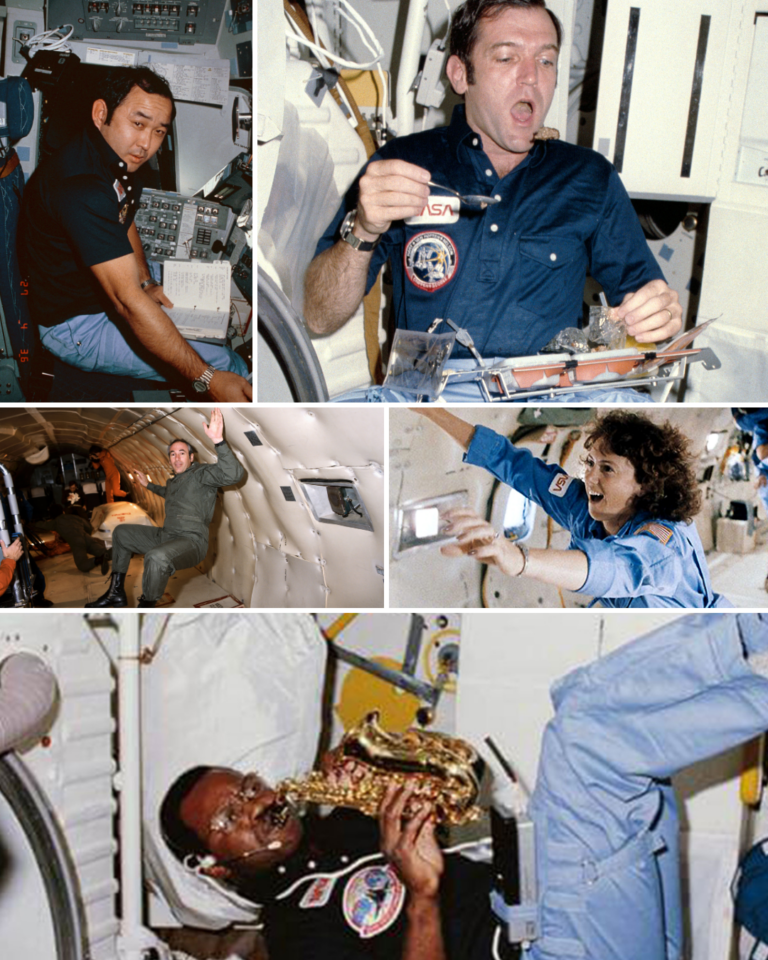
Each lesson includes step-by-step instructions, a worksheet, and is accompanied by a crew member biography handout, giving students context about who these astronauts were and how their unique paths led them to space.
All Crew Lesson Plans:
Launch Vehicle Design Challenge
Francis R. Scobee
COMMANDER
A U.S. Air Force pilot and aerospace engineer, Scobee was known for his dedication to aviation and leadership. He previously piloted a shuttle mission and was passionate about flight.
Objective: Build a straw or paper rocket that travels the furthest or most accurately.
Simulated Spacecraft Landing
Michael Smith
PILOT, NAVAL AVIATOR
A Navy test pilot and engineer, Smith was responsible for controlling shuttle systems and assisting in landing. He was known for precision, testing protocols, and training.
Objective: Test parachute or glider designs for safe spacecraft landings.
Design a Satellite for a Mission
Ellison Onizuka
MISSION SPECIALIST, AEROSPACE SYSTEMS ENGINEER
The first Asian-American in space, Onizuka was a systems engineer in the Air Force and was known for his problem-solving skills, especially in satellite and space systems.
Objective: Create a satellite model that meets specific mission goals.
Biomedical Circuitry Challenge
Judith Resnik
MISSION SPECIALIST, ENGINEER
Resnik was a biomedical and electrical engineer who focused on the application of circuits and computer systems in space. She was the first Jewish woman and the second American woman in space, and a strong advocate for women in STEM.
Objective: Simulate a biomedical device that tracks pulse using circuits or analog models.
Light & Sound Waves Exploration
Ronald McNair
MISSION SPECIALIST, PHYSICIST
McNair held a Ph.D. in physics and was a pioneer in laser science. He was also an accomplished saxophonist and worked to inspire students from underrepresented backgrounds to pursue science.
Objective: Explore properties of light and sound, linking to music and lasers.
Fluid Behavior in Microgravity
Gregory Jarvis
PAYLOAD SPECIALIST, FLUID DYNAMICS
Jarvis was an engineer at Hughes Aircraft and specialized in how fluids behave in microgravity—essential for fuel, water, and biological systems aboard spacecraft.
Objective: Investigate how water moves differently in space.
Time Capsule for Future Classrooms
Christa McAuliffe
TEACHER IN SPACE
McAuliffe was a high school social studies teacher selected as the first civilian and teacher to fly into space. Her mission was to make space relatable to students and share the journey with classrooms across the country.
Objective: Design a time capsule that could survive either on Earth or in space to teach students 100 years in the future.
Challenger's Legacy
In the aftermath of the Challenger STS-51L tragedy, the crew’s families came together, firmly committed to carrying on the spirit of their loved ones by continuing their education mission. In April 1986, they created Challenger Center for Space Science Education.
The families’ vision was to create a place that would inspire children, where students could conduct experiments, collaborate to solve problems, and immerse themselves in space-like surroundings. Their goal was to spark an interest and joy in STEM. A spark that could change the trajectory of children’s futures.
To date, Challenger Center has reached more than 7 million students globally and continues to inspire hundreds of thousands of students every year.
In Partnership
Challenger Crew lesson plans were developed by Challenger Learning Center of Lake Erie West. Information in Challenger Crew bios is courtesy of NASA Lyndon B. Johnson Space Center (Dec. 2003).