Blogs | 3.16.2026
How Do Scientists Solve Planetary Mysteries Without Leaving Earth?
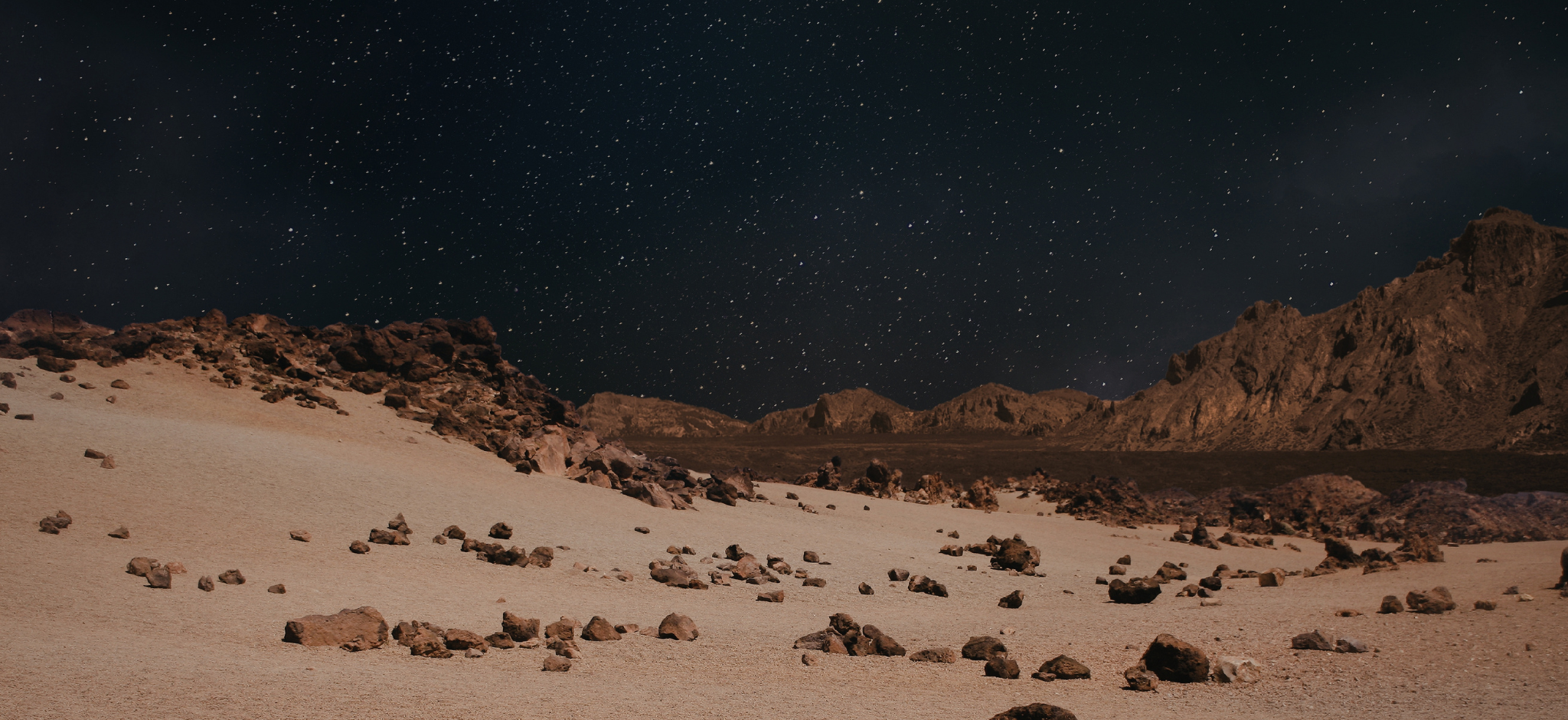
When first learning about our solar system and universe, many students ask a similar question: How do we know this? How do scientists study planets they’ve never actually visited?
 For planetary geologists like Dr. Kirby Runyon, the answer starts with spacecraft. Robotic missions travel across the solar system, capturing images and data that scientists analyze back on Earth.
“In astronomy and astrophysics, you might be studying nebulae, black holes, quasars, and neutron stars, which is great,” says Runyon. “But we’re probably never going to actually send a spacecraft there because of the universal speed of light limit. Within our own solar system, however, it’s still small enough that we can send robotic spacecraft to the places that we’re studying.”
Those spacecraft might orbit a planet and send photos or land rovers directly on the surface. Scientists then use those images and readings to interpret what they’re seeing.
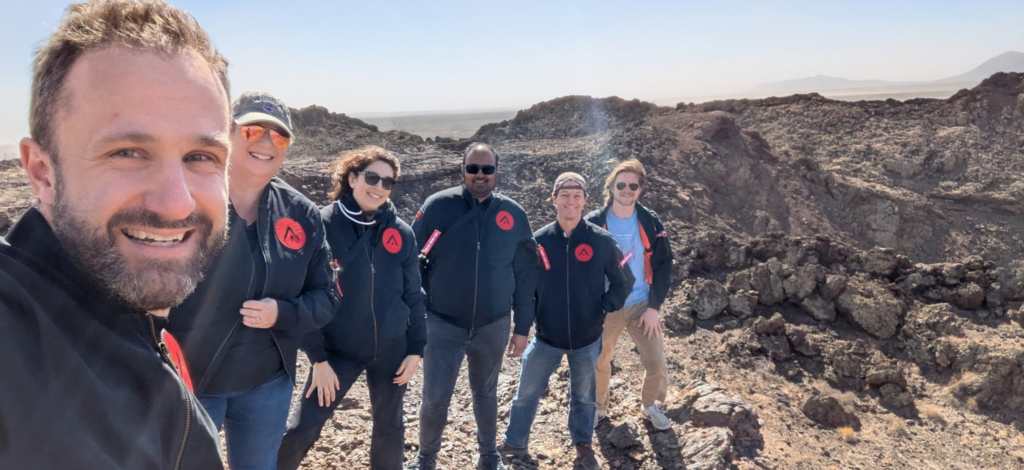
Runyon is a planetary geologist, which means he studies the landscapes of planets and moons. Even though he hasn’t physically walked across those worlds, he spends his time carefully examining their features, trying to understand what happened there long ago.
Planetary Geology Is a Forensic Science
In many ways, studying another planet is like solving a mystery.
Runyon describes geology as a type of detective work. “All of geology, whether it’s planetary geology or Earth geology, is a forensic science,” he explains. “If you’ve ever watched a crime scene investigation show, you’ve got detectives out at a crime scene piecing together clues of what happened in the past.”
Instead of fingerprints or footprints, planetary geologists look for clues in the shapes of landscapes. A crater might reveal where an asteroid slammed into the surface. A long valley might show where water once flowed. Lava plains point to ancient volcanic eruptions.
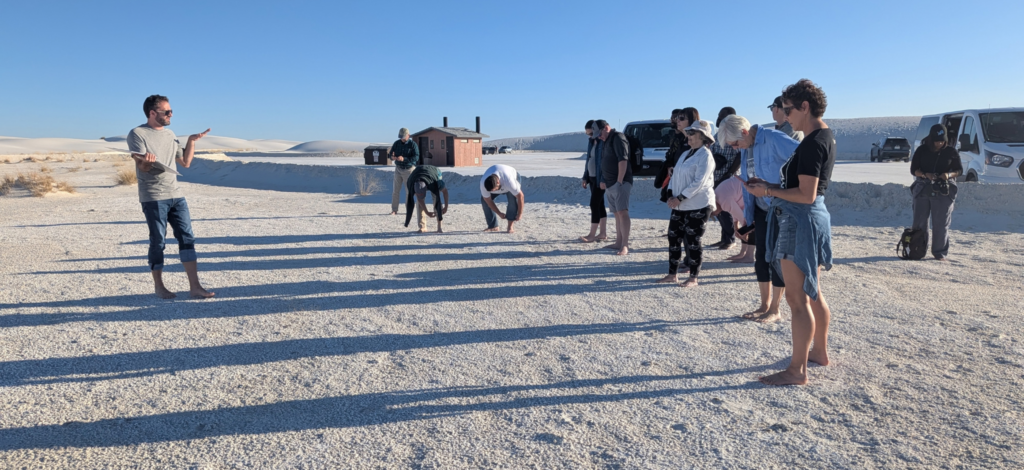
Events like earthquakes, asteroid impacts, wind erosion, and volcanic activity all leave marks behind. By studying those marks, scientists can reconstruct a planet’s history.
Runyon says anyone who has admired a beautiful landscape is already doing a little bit of geology.
“If you’ve ever been awed by a scenic landscape on Earth, you’re doing the first level of geology,” he says. “You’re taking in that landscape and trying to understand it.”
The Tools of the Trade: Images, Maps, and Patterns
Planetary geologists rely heavily on images from spacecraft cameras. These images allow them to examine landscapes from thousands of miles away.
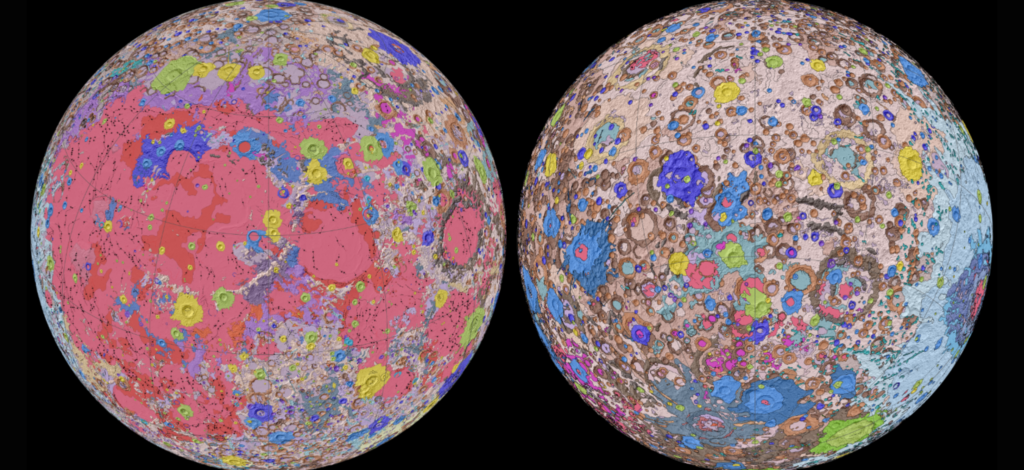
One of the tools they use is something called geologic mapping.
“I literally draw lines on pictures between different types of terrain, and then I color in the terrains,” Runyon explains.
By mapping different regions—such as volcanic rock, impact craters, or sediment layers—scientists can simplify complex landscapes and start piecing together their history.
Clues can appear at many different scales. Some features are enormous, like impact basins stretching hundreds of miles across. Others are tiny details visible only through rover instruments that can zoom in on rocks up close.
By combining these observations, scientists begin to tell the story of a place.
What We’ve Learned From Afar
Take Mars, for example.
NASA’s Perseverance rover is currently exploring Jezero Crater, which scientists believe was once home to an ancient lake. Long ago, Mars had conditions that allowed liquid water to flow across its surface.
Today, the water is gone—but the evidence remains in the rocks.
Layered cliffs show where sediment slowly settled at the bottom of the lake over millions of years. Wind-carved rock formations reveal how the Martian environment changed over time. Fine-grained sediments on the crater floor are especially exciting to scientists, because they could preserve signs of ancient microbial life.
The Moon offers another fascinating record of planetary history. The Moon’s surface is far more stable than that of Earth, where rocks are constantly recycled by plate tectonics and weathering. That means its craters preserve a record of impacts that stretches all the way back to the early days of the solar system.
Why This Matters for Human Exploration
Understanding alien landscapes isn’t just about solving scientific puzzles. It also helps prepare for future missions.
“Planetary geology and human spaceflight are intimately connected,” Runyon says. “Astronauts make incredibly good geologists, and geology is one of the key things astronauts are going to be doing on the Moon and Mars.”
Knowing the terrain can help mission planners decide where to land spacecraft, where rovers can safely travel, and where astronauts might find valuable scientific samples—or even useful resources.
Students exploring Challenger Center’s Satellite Challenge: Destination Mars tackle similar problems. In the simulation, one team studies terrain, climate, and surface conditions on the two moons of Mars to determine the best place to build a future human base. They use the same kind of geologic mapping that Dr. Runyon works on!
They must consider questions real scientists face: Is the surface flat enough for construction? Are temperatures extreme? How much radiation might astronauts experience?
Just like real planetary geologists, students analyze limited data and make informed decisions about where humans might explore next.
Learning to See Like a Scientist
The good news is that you don’t need to be a scientist to start thinking like one.
Planetary geology begins with curiosity—simply looking closely at landscapes and wondering how they formed. Maybe you’ve noticed ripples in sand at the beach, layers in a rocky cliff, or the shape of a river valley. Those observations are the first step toward understanding how nature works.
Space exploration isn’t only about traveling to distant worlds. It’s also about learning how to interpret what we see.
By studying images from spacecraft and asking thoughtful questions, scientists can uncover the hidden stories of planets and moons across the solar system—without ever leaving Earth.
And who knows? The next great planetary detective might be sitting in a classroom right now.
Keep Reading
We think you may like these.
Blogs
Challenger Learning Center of the Twin Tier Region Named Arthur C. Clarke Innovation Award Winner
Challenger Learning Center of the Twin Tier Region Named Arthur C. Clarke Innovation Award Winner
Challenger Learning Center of the Twin Tier Region Named Arthur C. Clarke Innovation Award Winner
...
Read More
