Blogs | 4.14.2026
Artemis’ Impact on Inspiring the Next Generation of Explorers
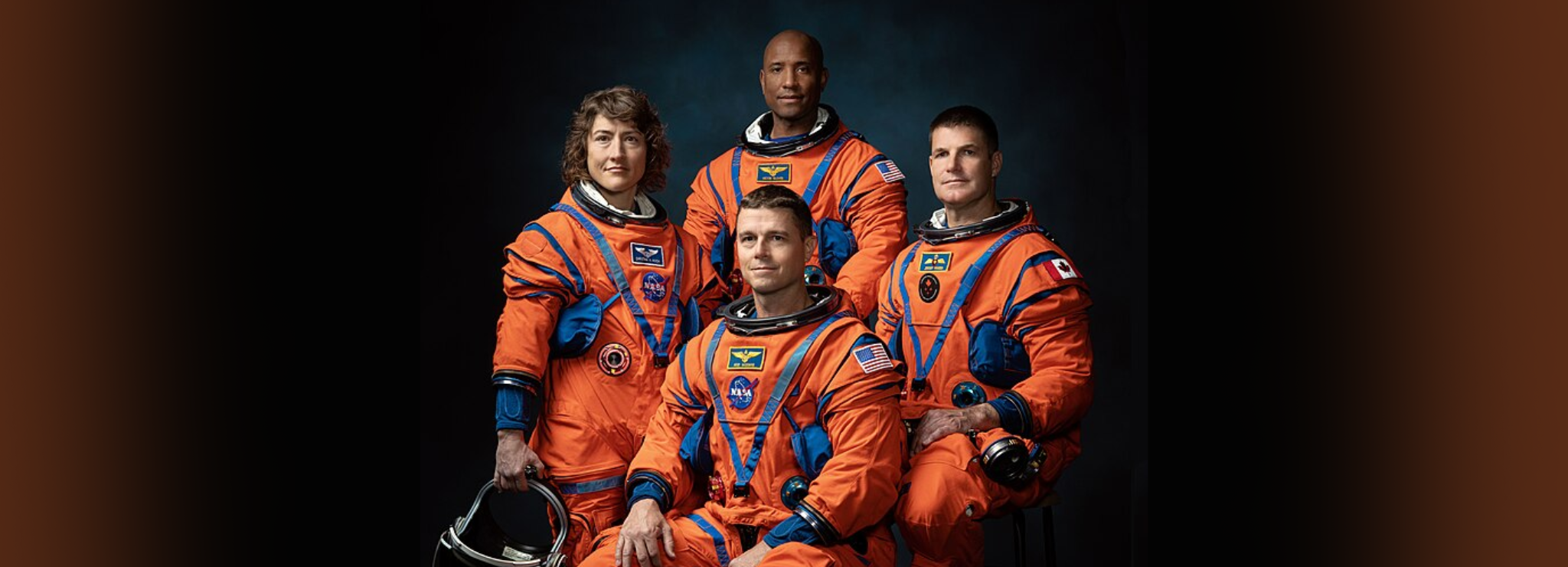
When Artemis II lifted off on April 1, 2026, the world witnessed the return of human exploration beyond low Earth orbit for the first time since Apollo 17. For millions, this mission reignited a sense of wonder that had been dormant for more than five decades. And for students, it offered something even more powerful: a glimpse of their future.
Launched aboard NASA’s Space Launch System from Kennedy Space Center, Artemis II carried four astronauts—Reid Wiseman, Victor Glover, Christina Koch, and Jeremy Hansen—on a historic journey around the Moon. Their mission was a test flight, paving the way for future Artemis missions that aim to return humans to the lunar surface and establish a sustained presence there. But beyond its technical achievements, Artemis II captured hearts across the globe.
The crew itself represented a milestone in who gets to explore space. Glover became the first person of color to travel beyond low Earth orbit, Koch the first woman, Hansen the first non-U.S. citizen, and Wiseman the oldest person to make the journey. For young viewers watching from classrooms, living rooms, and science centers, the message was clear: space is for everyone.
Artemis II also broke new scientific ground. During their lunar flyby, the astronauts reached a record-breaking distance of 252,756 miles from Earth—the farthest humans have ever traveled. They observed the Moon’s far side, including rare “impact flashes” from meteoroids striking its surface, and tested critical systems for deep space travel, from spacecraft maneuverability to the first deep space toilet.
Yet for all its scientific and engineering accomplishments, the mission’s greatest success may have been its ability to bring people together. Across the United States, communities gathered to watch history unfold. At Challenger Learning Center of Tallahassee, crowds assembled not just for the launch, but again for the splashdown on April 11, when the crew safely returned to Earth in the Pacific Ocean.
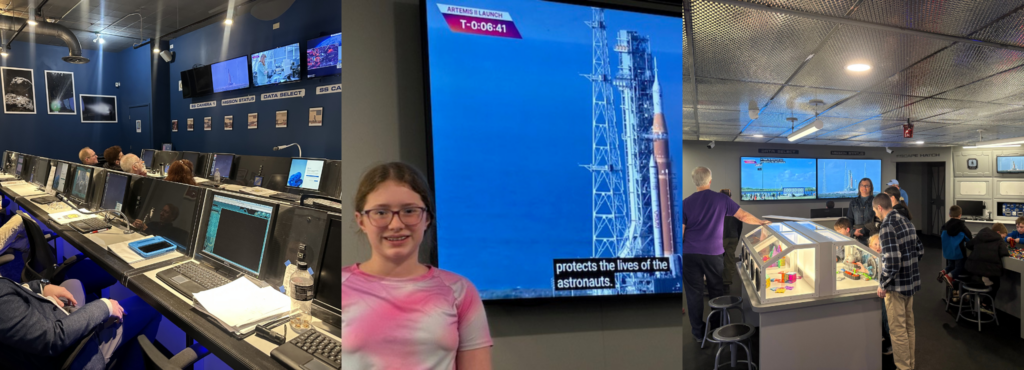
“We hosted these events to capture the surge of public interest in space science and exploration and bring that excitement directly into our center,” said Jordan Hall, Education Manager at the Tallahassee Center. “While we continue to honor the legacy of the Challenger Mission, experiencing the present-day Artemis Mission together added an extra special layer of meaning for our students—the astronauts of the future.”
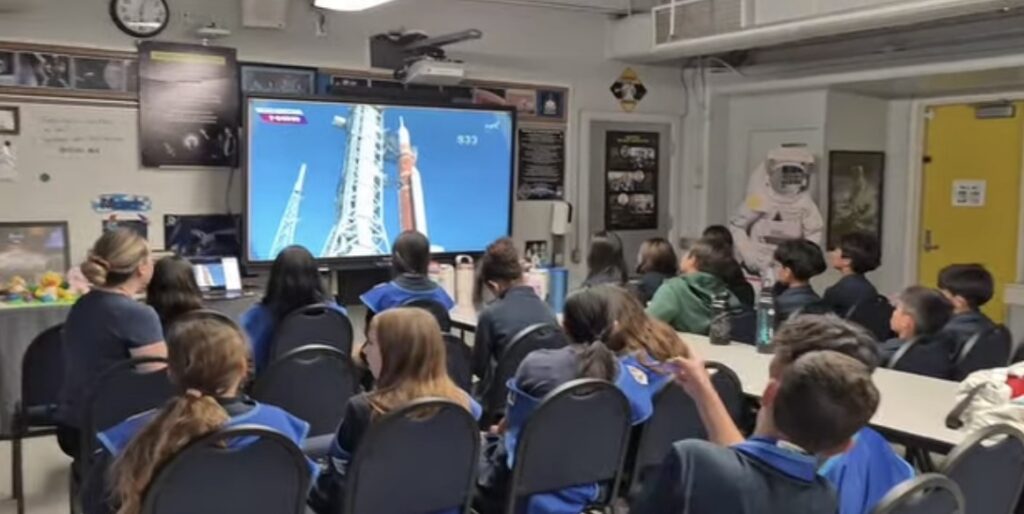
That sense of shared experience echoed at Challenger Learning Centers across the country. In Hawaii, students in the middle of a simulated mission to Mars took a break from their own mission to watch Artemis II launch. And in Bangor, Maine, Challenger Learning Center of Maine welcomed community members eager to witness the launch. “It was so wonderful to see a multi-generational gathering of people come together,” said Executive Director Kirsten Hibbard. “For the students we serve, it really feels like we are helping build the Artemis generation.”
And in New York state, Challenger Learning Center of Lockport hosted its own watch party, marking a new chapter in community engagement. “Professionally, this was a proud moment… Personally, it was a really cool and immersive way to view the launch,” said Executive Director Michael Schian.
These gatherings were celebrations of a shared human story of exploration, one that students can see themselves in. As Flight Director James Tyson put it, “This mission is about inspiration, human achievement, and the collective hope of humanity for a better world and future.”
That hope is rooted in what comes next. Artemis II is only the beginning. In the coming years, astronauts will return to the Moon’s surface, with plans to build a sustainable lunar base that will serve as a proving ground for even more ambitious exploration. And beyond the Moon lies Mars. Today’s students—those watching launches, attending watch parties, and stepping into simulated missions—may one day contribute to humanity’s first journey to the Red Planet.
That is the true impact of Artemis II. It is not just about records set or milestones achieved, though those are extraordinary. It is about rekindling a global sense of curiosity and possibility. Missions like these show young people that there is so much more to explore and discover.
In classrooms and Challenger Learning Centers across the country, the future is already taking shape. The Artemis generation is here—and they’re ready to explore.

Keep Reading
We think you may like these.