Blogs | 2.20.2026
How Mission Patches Tell a Story
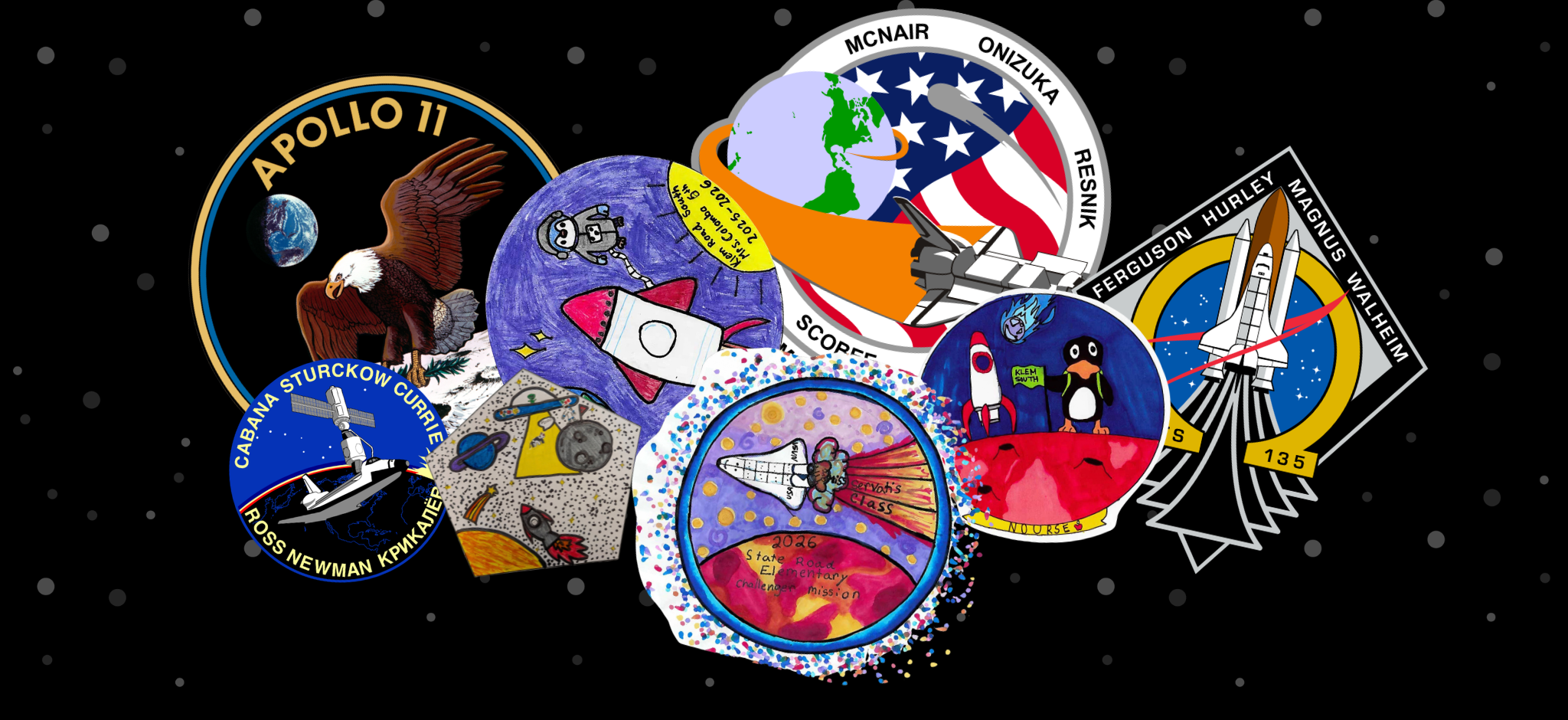
What defines a space crew? Is it their specialties, their training, their mission goals? Those details tell us what they were assigned to accomplish and why, but if you truly want to understand who these intrepid explorers were as a team — their shared identity, what they valued, and how they chose to be remembered — look to their mission patch.
Mission patches are important logos or insignia worn by astronauts and affiliated personnel on a spaceflight mission. Designing a patch is often one of the first tasks a crew is given. Astronauts either work together or with a graphic designer to choose pictures, colors, and symbols, and create a patch that not only represents the purpose of their mission, but also represents each astronaut on the team.
A Patch Is Worth a Thousand Words
There are countless creative ways crews have chosen to represent themselves through their patch. The first shuttle mission to the International Space Station, STS-88, features a rising sun on its patch to symbolize the dawn of a new era of international cooperation. STS-135 includes the Omega — the last letter of the Greek alphabet — because it marked the final mission of NASA’s Space Shuttle Program. Each patch tells a story…
 The primary goal of STS-130 was to deliver Node 3 and the Cupola to the ISS. The crew incorporated the Cupola — a seven-windowed viewing station from which astronauts can look back at their home planet — into the very shape of the patch itself, making the mission’s objective central to its design.
 The Apollo 11 mission patch depicts an eagle landing on the moon, representing the United States. It carries an olive branch, signifying “peace for all mankind.” The patch notably does not include the astronauts’ names — a deliberate choice by the crew to show this achievement was to be shared by all.
 The Challenger STS-51L patch depicts the space shuttle launching from Florida. One of the crew’s duties was to observe and photograph Halley’s Comet, which appears on the patch against a backdrop of the United States flag. Crew member surnames encircle the insignia, with McAuliffe’s name followed by a small apple to represent her role as Teacher in Space.
The details in these designs help them stand out and reflect the unique mission goals and people behind them.
From NASA Crews to Student Crews
The tradition of mission patches doesn’t end with human spaceflight. Challenger Learning Centers across the globe ask students to step into that same creative process before they set foot in the building.
Before their scheduled Mission, students are invited to design a mission patch that represents their class (AKA, their crew), encouraging them to think carefully about the elements real astronauts consider: What is our mission goal? What symbols represent our teamwork? What colors capture our identity? Each class then votes on the design that best represents them as a whole.
By the time students arrive at the Center, they’re already a crew with a shared symbol.
At the end of a successful Mission, the Center will hang the class’s patch on a “Hall of Fame” bulletin board. Some Centers even maintain patch archives that stretch back decades — teachers returning with their own students can point to a patch they designed when they were students themselves.
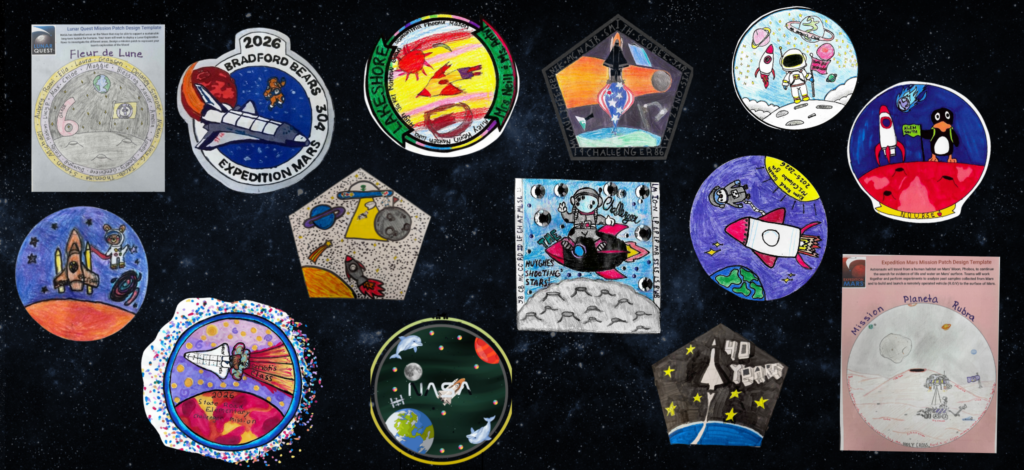
“Mission patches are one of my favorite parts of Mission day,” says Heather Townley, Director of Network Engagement. “They highlight the many people and talents required to plan a successful mission and unite the mission specialists under a single symbol as they fly together as one team.”
Just as every NASA mission patch tells the story of a crew, these student-designed patches serve as a reminder of the teamwork, creativity, and values these classes carried when they “went to space.”

Keep Reading
We think you may like these.