Blogs | 4.24.2026
Happy Birthday, Challenger Center!
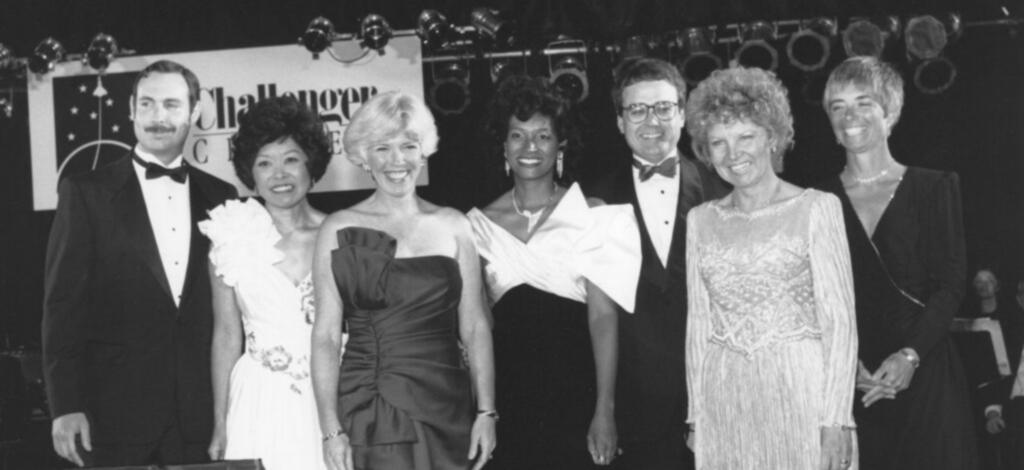
In 1986, shortly after the Challenger tragedy, Dr. June Scobee Rodgers, widow of Challenger Commander Dick Scobee, sat beside Nancy Reagan at an event in memory of the fallen crew. As a missing man formation flew overhead — an aerial salute for those who gave their lives in service — June asked a question that had been weighing on her. “I know NASA will continue space missions, but who will continue Challenger’s educational mission?”
Nancy responded, “I guess we will, June.”
And from that exchange, the idea for Challenger Center was born.
A Mission Takes Shape
In the months that followed, June gathered the other Challenger crew families and began thinking through what honoring that mission might actually look like.
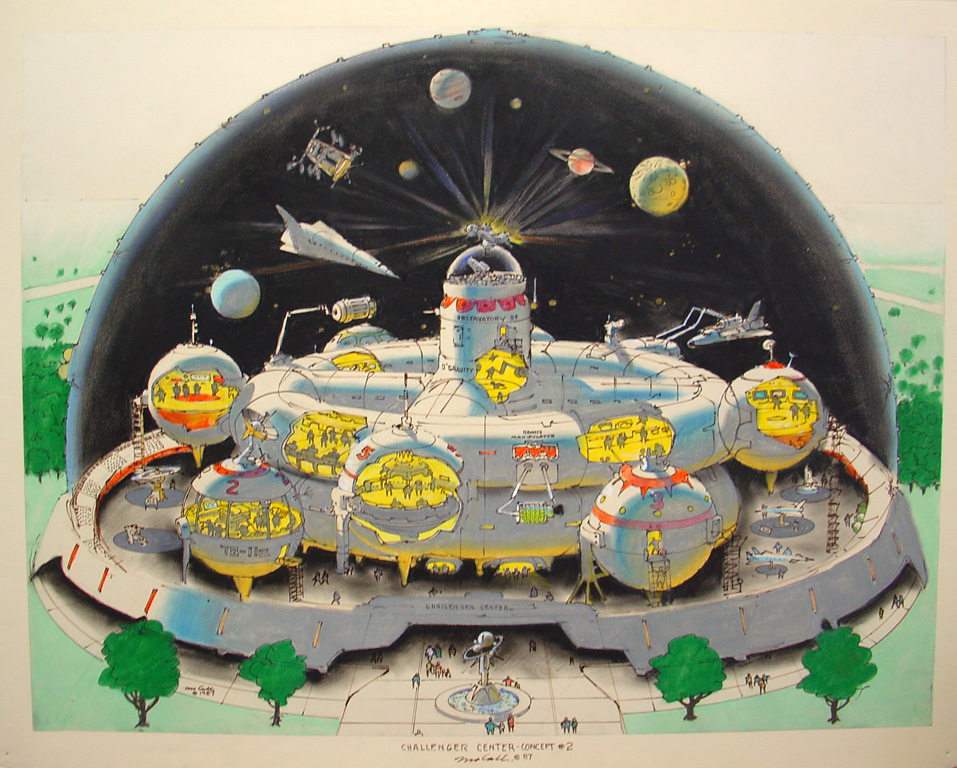
Sitting around June’s dining room table, the families worked alongside artist Bob McCall and astronauts Kathy Sullivan and Richard Garriott to create the early sketches of a space that would encourage students’ creativity and teach vital life skills like teamwork and critical thinking. “We used the look and feel of true space exploration backdrops as our inspiration,” said June. “While not quite sure of the path to get there, we believed in what we were doing and knew we were about to embark on something magnificent.”
Soon after, Challenger Center was able to hire staff to help create the Missions that would become the heart of the organization’s programming. “I told them my ideas for a mission to the moon, to Mars, and to rendezvous with the comet,” recalled June.
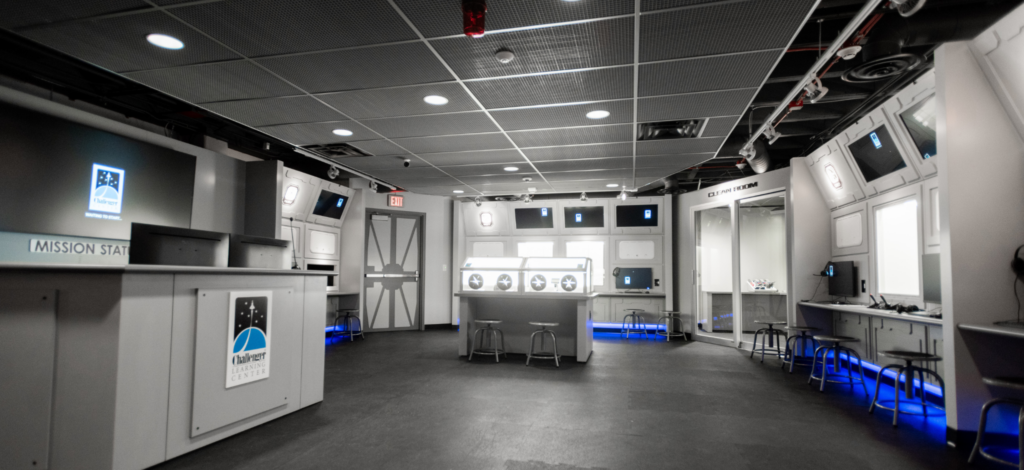
Just two years later, the first Challenger Learning Center opened its doors. It was a physical embodiment of everything the crew had stood for. Students could walk into a simulated space environment, take on mission-critical roles, and experience firsthand what it meant to think like a scientist or engineer under pressure. It was unlike anything that existed in K-12 education at the time.
The original plan was modest: open one Challenger Learning Center, a single tribute to the crew’s legacy. But George H.W. Bush, who had stood by the families’ side since the tragedy, encouraged them to dream bigger. “Believe me, they’ll listen if you paint a vision for them of where you want this to go and what you want it to be,” he told June. “All you need are your teaching skills.”
A Growing Network, A Deepening Impact
What began as a single Center quickly became a national vision. By 1989, a second Center opened in Maryland. From there, the mission continued to grow. Center by center, state by state, Challenger Center’s network expanded across the country, each location offering the same core promise: immersive, hands-on STEM experiences that treat students not as passive learners, but capable explorers.
Today, Challenger Center operates a network of 32 Challenger Learning Centers in 23 states and South Korea. In the last 40 years, we have reached 6.5 million students worldwide. But our growth doesn’t stop there — in two weeks, our newest Center, Challenger Learning Center of Northeast Alabama, will open in Rainbow City, Alabama.
These numbers tell part of the story, but the deeper impact is harder to quantify: alumni who credit Challenger Center with sparking a career in medicine, engineering, or aerospace; teachers who say the experience brought out confidence in their most self-doubting students; kids from communities that rarely see themselves reflected in STEM fields who left a Center Mission feeling as if they belonged there.
That sense of belonging is central to everything Challenger Center does, and the work is expanding. Through Satellite Challenges, Challenger Center now brings live, online space simulations to communities without a physical center nearby, led by a live Flight Director, so that geography is no longer a barrier to the experience.
Launching the Next 40 Years
Four decades after its founding, June Scobee Rodgers and the other Challenger family members are still active in the organization, serving on our board of directors and advisory council. June still speaks with the same purpose that drove her to that dining room table in 1986. “It’s been 40 years since the loss of that marvelous crew, but it’s also been 40 years since we began to continue that mission with the next generation. Challenger Center belongs to the future.”
The seven crew members of Challenger STS-51L — Dick Scobee, Michael Smith, Judith Resnik, Ellison Onizuka, Ronald McNair, Gregory Jarvis, and Christa McAuliffe — gave their lives in the pursuit of discovery and the dream of bringing space exploration to a new generation. Challenger Center exists to make sure that dream never stops flying.
Happy 40th birthday, Challenger Center. The mission continues.
Keep Reading
We think you may like these.
Blogs
Challenger Learning Center of the Twin Tier Region Named Arthur C. Clarke Innovation Award Winner
Challenger Learning Center of the Twin Tier Region Named Arthur C. Clarke Innovation Award Winner
Challenger Learning Center of the Twin Tier Region Named Arthur C. Clarke Innovation Award Winner
...
Read More
